

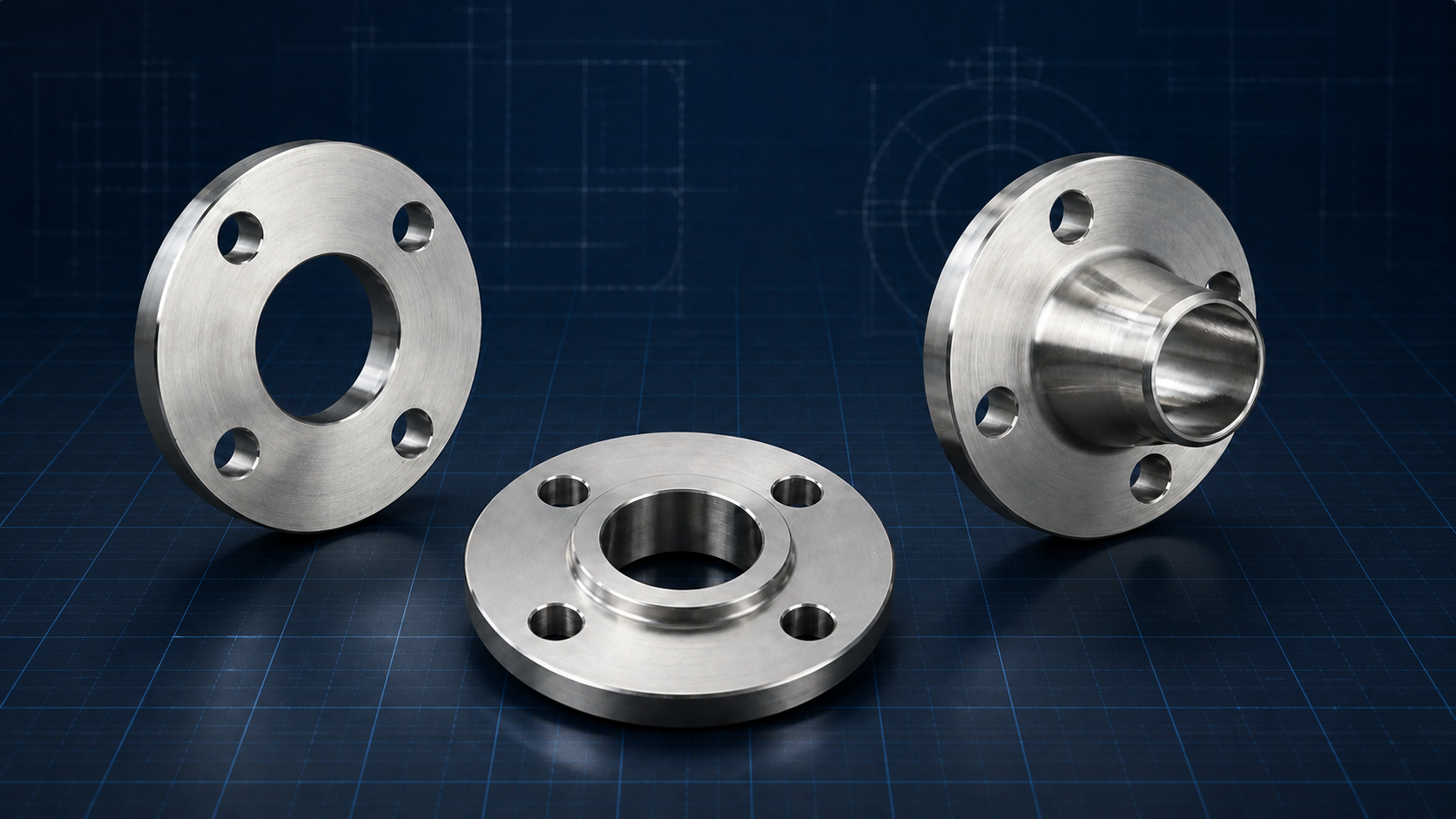
In industrial sourcing, “equivalent” may mean that two documents cover similar products, that some requirements overlap, or that two items can replace each other in a specific application. Only the last meaning resolves a purchasing decision, and it requires technical evidence.
This article does not declare universal equivalencies. Every substitution must be approved against project requirements and service conditions.
A standard is a set of requirements, not a quality label
ASTM, ASME, API, and ISO publish documents with different purposes. A material specification does not automatically replace a dimensional standard; a design standard alone does not prove that the required material was supplied; a management-system certification does not certify every product.
“ASTM flange” is therefore incomplete. The purchase may need a material specification, a dimensional and pressure-temperature standard, marking, testing, and document requirements.
Five questions before accepting an alternative
1. Do both documents cover the same product?
ASTM A53/A53M covers black and hot-dipped galvanized, welded and seamless steel pipe within its scope. ASTM A106/A106M covers seamless carbon steel pipe for high-temperature service. Similar sizes or grades do not make their scopes identical.
2. Do manufacturing method and grade match?
Seamless, welded, cast, and forged describe different manufacturing forms or processes. An alternative must preserve the required form or declare a deviation. Compare composition, mechanical properties, heat treatment, and supplementary requirements where applicable.
3. Do dimensions and interfaces match?
Nominal size does not prove equal outside diameter, thickness, bolt pattern, facing, thread, or end preparation. Physical compatibility must be demonstrated using the applicable dimensional standards and product drawings or data sheets.
4. Do rating and service conditions match?
A class is not a fixed pressure independent of material and temperature. ASME B16.5, for example, includes pressure-temperature ratings within its scope. Evaluate the actual material, class, and temperature.
5. Do testing, marking, and documents match?
Dimensionally compatible products may differ in mandatory tests, traceability, marking, or documentation. Those differences may determine contractual acceptance.
Documentary, functional, and approved equivalency
Record three levels:
- Documentary correspondence: comparable requirements were identified.
- Proposed functional alternative: the supplier provides evidence that the item can perform the intended function.
- Approved substitution: the project’s technical authority accepts the deviation for the specific application.
Do not use “equivalent” as the final result before the third level. In earlier stages, retain the word “proposed.”
Minimum comparison matrix
| Criterion | Required specification | Alternative | Status |
|---|---|---|---|
| Product and scope | Compliant / deviation | ||
| Edition | |||
| Material and grade | |||
| Manufacturing method | |||
| Dimensions and interfaces | |||
| Pressure and temperature | |||
| Testing | |||
| Marking and traceability | |||
| Documents | |||
| Project approval | Pending / approved / rejected |
Edition control
Standards change. A designation without a year may leave the applicable edition open, and a newer edition may change requirements. Record the required edition, offered edition, and impact. Consult the standards body’s official catalog rather than an undated commercial chart.
Common mistakes
- Treating similar materials as identical.
- Comparing nominal dimensions only.
- Ignoring temperature when reading a pressure class.
- Naming the standards body without number or edition.
- Accepting “complies” without defined evidence or traceability.
- Treating ISO 9001 certification as product conformity.
- Replacing technical approval with a supplier’s sales note.
Closing
A responsible equivalency does not come from a synonym table. It comes from comparing each requirement, documenting deviations, and obtaining approval for the actual application. Without that evidence, the correct result is not “equivalent”; it is “pending validation.”
Did you receive an alternative to the requested specification?
Let’s review your specification.Sources
- ASTM A53/A53M-24, accessed 2026-08-27: https://store.astm.org/a0053_a0053m-24.html
- ASTM A106/A106M-26, accessed 2026-08-27: https://store.astm.org/a0106_a0106m-26.html
- ASME B16.5-2025, accessed 2026-08-27: https://www.asme.org/codes-standards/find-codes-standards/b16-5-pipe-flanges-flanged-fittings-nps-1-2-nps-24-metric-inch-standard/2025
- ISO, Certification, accessed 2026-08-27: https://www.iso.org/certification.html